Pages: Previous... 0 1 ...Next
2010-04-14 03:35:22 | Tags:
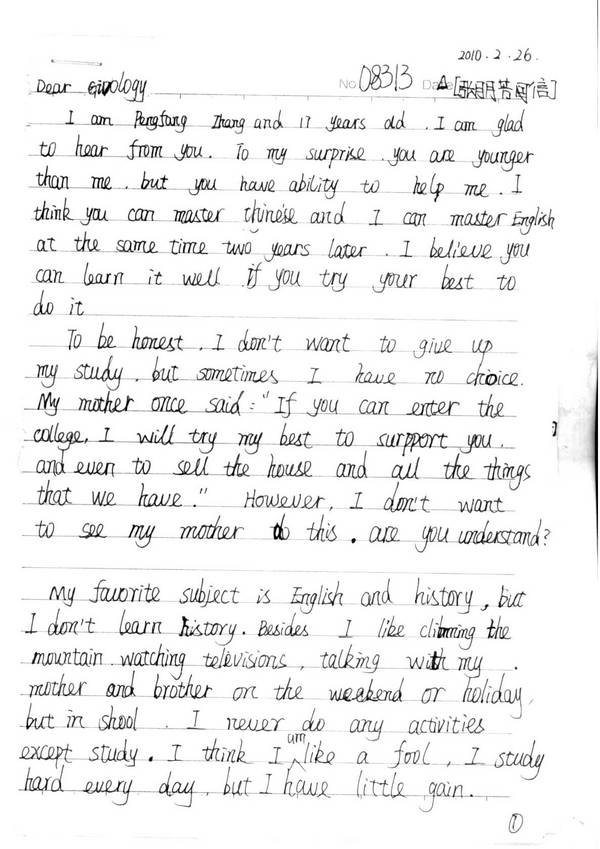
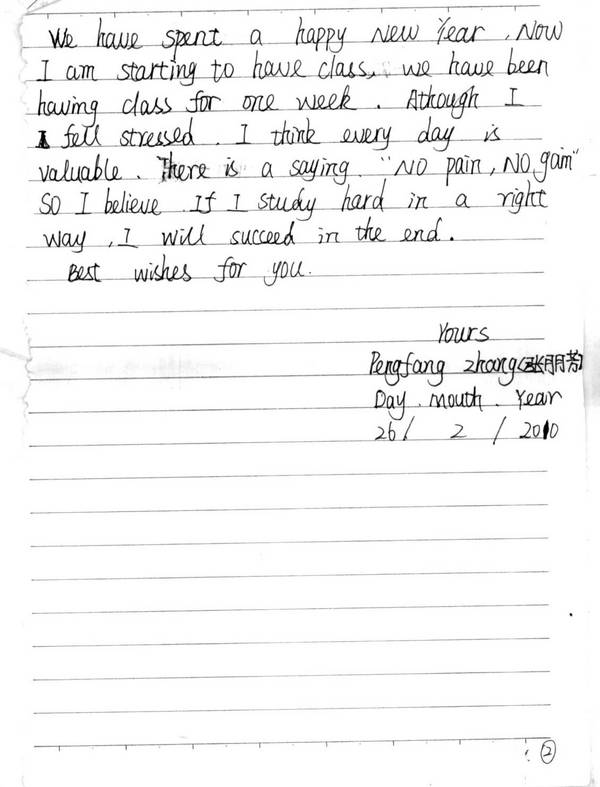
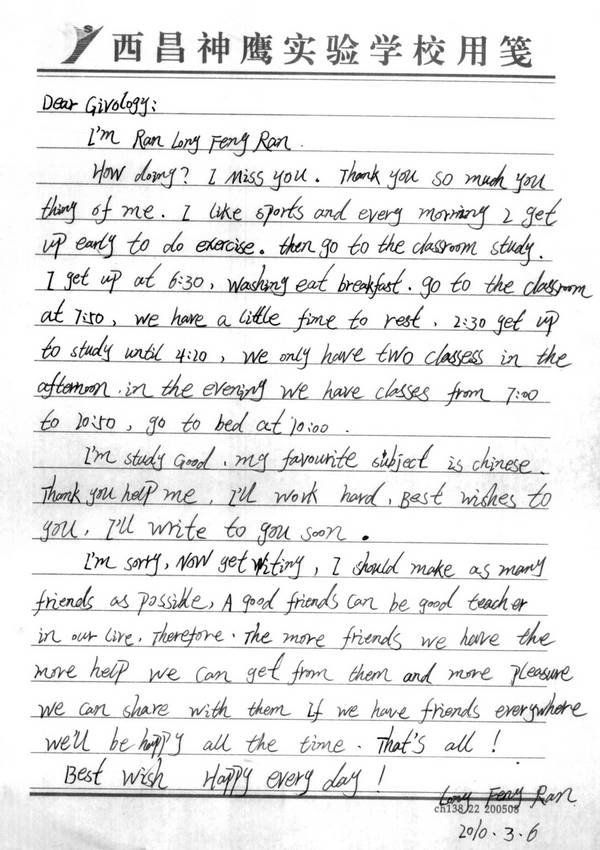
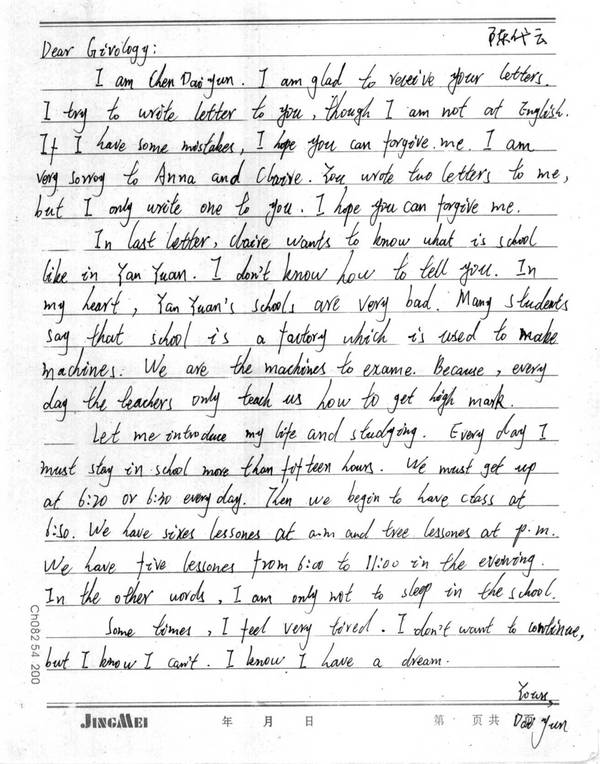
I'm always inspired when I read the letters of the Peach Foundation students. We recently received several letters from the Peach students in Sichuan Province written in English (see below).

I think it's really great to see these students practicing their English by writing to their Givology supporters. To me, this demonstration of basic proficiency is proof that through their education, they are acquiring marketable skills (competency in a foreign language) that will be useful to them when they graduate, regardless of whether they are able to continue on to college and graduate school. Having spent two summers in China, I feel that there are alot of opportunities for those who speak English, especially in industries such as tourism. So while I think it's great if Givology can sponsor students who go on to become doctors, politicians, teachers, etc., it's also very worthwhile if we can help students finish a high school education that will give them skills to earn a slightly better living.

As you can see, the messages from our donors really do encourage the students, and they really do appreciate it when they hear from the Givology community. Please keep messaging them! Many, including the Peach students, face daily pressure to drop out due to the earnings they know they are giving up by staying in school. As many of the Peach students have written in their letters, if they were to leave school, they could start contributing to their family's income, instead of being a burden on their parents. Even if Givology covers their school expenses, we still do not cover the opportunity cost of not finding a job. Messages of encouragement can really make a difference in keeping these students motivated and focused on their end goals.


0 Comments | Add a Comment
2010-04-11 06:25:16 | Tags: givology news
The past few weeks have been extremely busy for the Penn Givology team!

1. Penn Undergrad Social Impact Conference: On March 26, the Social Impact Task Force, a coalition group of social impact oriented student organizations on Penn's campus, collaborated to host the 2nd Annual Undergraduate Social Impact Conference. As the Givology representatives on SITF, Catherine Gao and I were involved in securing speakers and panelists on topics such as corporate social responsibility, social enterprise, the effectiveness of international aid, and disaster relief. Most Givology team members attended some part of the conference. Keynote speakers included Chris Anderson, founder and curator of Ted.com, Dan Pallotta, author of Uncharitable, and Iqbal Qadir, director of the Legatum Center for Development and Entrepreneurship at MIT.

Ankit Shah, Givology’s campaign coordinator and a freshman at Penn, gave a brief presentation on Givology in between keynote speakers. At the end of the day, Givology team members were chatting with one of the panelists when she gave us some very direct feedback:

“Your hearts are obviously in the right place, but if you want my honest opinion, I think your model is wrong. Think about the effect you are having on the kids you sponsor – do they feel like they’ve earned the financial aid they are receiving? What are they supposed to think – ‘Thank God for the kindness of Americans?’…I’d have a completely different opinion if you were providing scholarships with defined criteria that the kids had to apply for.”

As translation coordinator, I handle communication between Givology’s field partners, students, and donors on a regular basis, and these objections had definitely crossed my mind before. I had also begun to wonder whether Givology’s requirement that partners provide four updates per year for every student and project was too burdensome, especially if students are already busy with schoolwork and are confused as to why they are receiving so many messages from so many different people. It’s easy to get swept up in the day-to-day demands of running a startup nonprofit – taking care of last minute details for an upcoming fundraiser, reminding partner organizations to send updates, planning for on campus awareness events – and sometimes the more philosophical and strategic questions get brushed aside in light of more immediate concerns. In reflecting on the panelist’s words, I became very glad she had voiced her skepticism, as it was a reminder to consider the implications of one’s efforts to “do good.” I think we can all agree that it’s not enough to have good intentions and want to “save the world” – it’s extremely important to constantly reevaluate whether our efforts are having the intended effects.

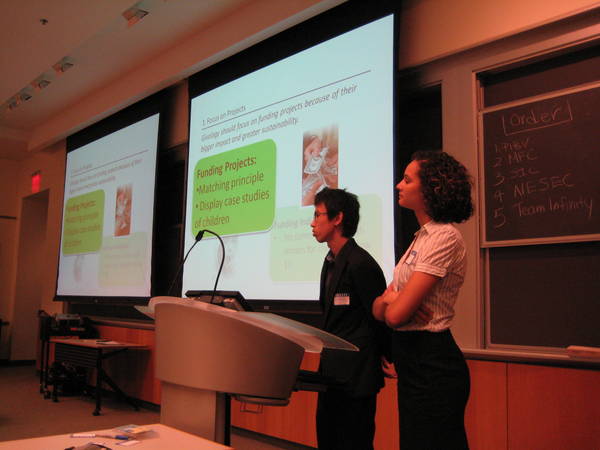
2. Givology Case Competition and Social Impact Week: I left the Social Impact Conference even more excited about the event Givology had planned for Social Impact Week– Givology’s first ever nonprofit management case competition. We invited teams of 2-4 Penn undergraduates to present to us their thoughts on strategic questions Givology is facing right now. As the primary author of the case background, I included the quote from the skeptical panelist, as well as snippets of emails I had received from partners explaining the difficulties they were having in struggling to provide us with quarterly updates from their students. I also added the latest version of our business plan so participants could understand our ideal vision of Givology and compare that to the status quo. We also included an excerpt from a Council on Foreign Relations , report on girls’ education, which we hoped would jumpstart the teams’ thinking about what types of students Givology might want to aim to benefit.

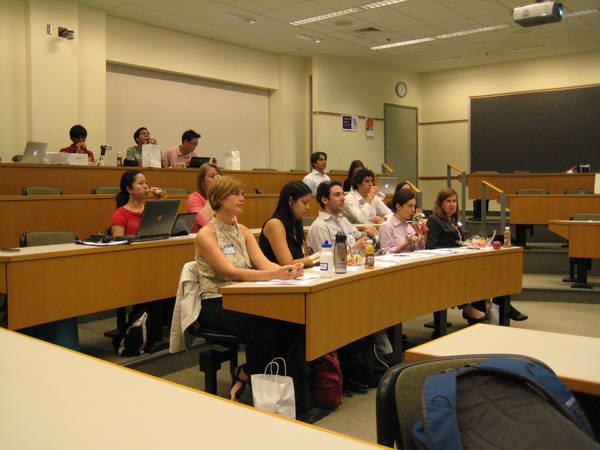
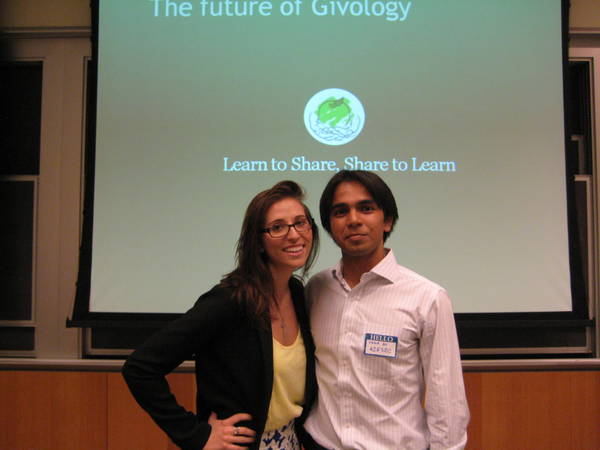
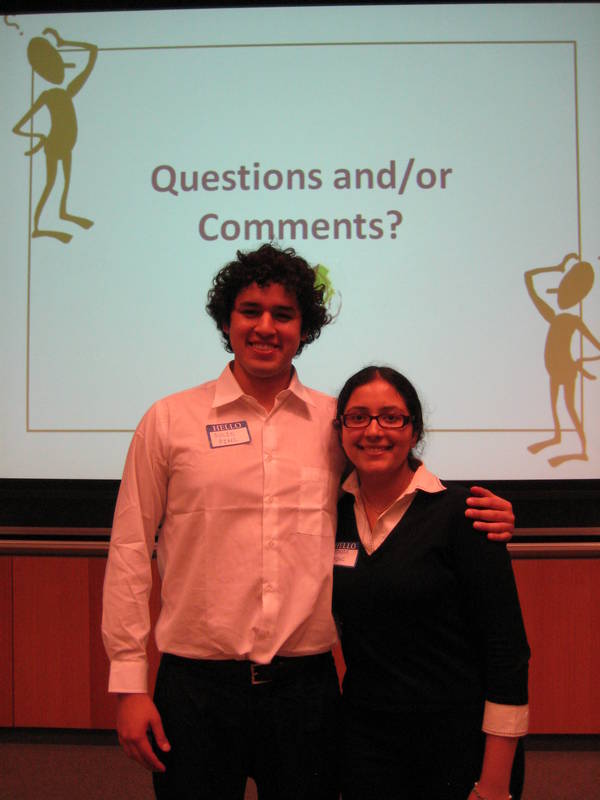
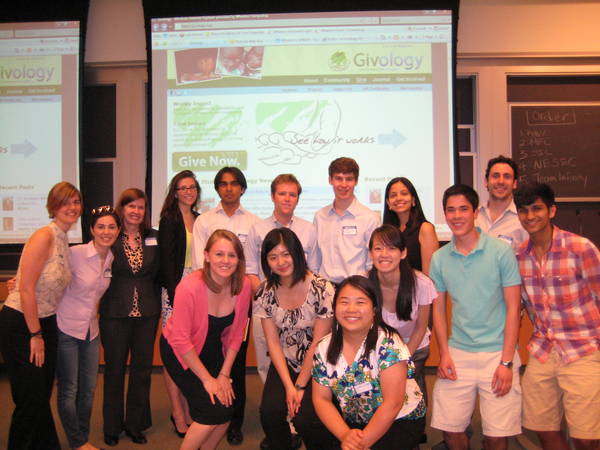
The case competition, which took place this past Thursday, was a GREAT success, thanks to the hard work of the case teams, the combined efforts of the Penn Givology team and the generous help of Professor Diana Robertson, Wharton MBAs Neil Blumenthal and Jem Veljic, and Masters’ students Sara Taveras and Cecilia Ramirez, who served on our judging panel. It was so inspiring to see other students so enthusiastic about brainstorming ways to improve Givology.

Below are some pictures from the event.


The members of the winning teams (there were two, representing the Social Impact Consulting Group and the AIESEC Penn chapter) will receive $500 to allocate to Givology students and projects of their choice, along with copies of Leaving Microsoft to Change the World, the inspiring story of the founding of the education nonprofit Room to Read.

Since we found it so incredibly useful to hear new perspectives on Givology’s strategy, the Penn team intends to follow up with each case team to exchange feedback and discuss ways some of their proposed strategies may be further researched and implemented.

Please check back – videos of the team presentations will be posted soon!
0 Comments | Add a Comment
2009-12-04 03:24:49 | Tags:
Hui, that was a really touching post. I think it's fantastic that your MGMT 100 team has been able to help us out. Thanks so much!

-Danielle
View Parent
0 Comments | Add a Comment
2009-09-16 18:15:21 | Tags:
Hi Ronald!

You can actually download our brochure here:
https://www.givology.org/spreadtheword/

- Click on "Brochure"
- Spread the word sends an automotic link and message

Any issues, please let me know. We're so glad you're passionate and interested in helping out!
View Parent
0 Comments | Add a Comment
2009-07-29 15:26:45 | Tags: notes from the field givology news
Back in early April, I used Givology’s message function to send a note to Yincong Fan, a ninth grader from Sichuan, China who I support. I didn’t write anything particularly profound – just a little about myself and my family and a few words of encouragement. Several weeks later I received Yincong’s reply, a two-page handwritten letter (translated by our Givology translation team) directly addressed to me (https://www.givology.org/~yfan/blog/).


Just from that letter I feel like I learned significantly more about Yincong than what her Givology profile provides. I learned that her favorite subjects are chemistry and Chinese, that she hopes to study literature and that she loves to write, and that she has a younger brother who will soon also enter high school. Yincong also sent me her best wishes, saying that she hoped I was happy at college. And now because of this letter, I have more questions for Yincong – what kind of writing does she like? Non-fiction? Short stories? Who are her favorite authors? How has her summer been? Does she get along well with her little brother? I also want to tell her about how I’ve spent the summer in Shanghai interning at a social enterprise, our upcoming New York City fundraiser, and how I’m looking forward to going back to Penn in the fall.


The most unique thing about Givology is not that it allows you to support students in developing countries, or that it uses an online giving marketplace model – it’s that donors can directly message our students and read their updates online regularly, bringing transparency in giving to new levels. Donors don’t just give a few dollars here and there – they can form real relationships with the students, acting as mentors and sharing stories about their lives in various countries all over the globe. Simply by telling a student a little about yourself, your family, your job, and other things that mean a lot to you, you are opening their minds to new ideas and inspiring them to work hard and stay in school. Donor messages humanize Givology and its partners – instead of receiving a scholarship from a faceless organization, students are developing relationships with their supporters and start to feel a real commitment to making the most out of the opportunity they have received. A student is simply less likely to become disengaged from school and drop out if she knows that people all over the world sincerely want her to continue her education and are expecting to hear about her progress. And thanks to our partner organizations in the field, messages are delivered even if the student has no internet access – our partners simply print out the donor messages we forward to them and then scan and email us student responses, which are then posted on the website. To view any student’s past letters, simply go to their Givology profile page and select “View my updates” under their profile picture.


As Givology’s Translation Coordinator, I manage all our correspondence with our students, and recently, I’ve come to realize that we are not fully leveraging our ability to forge real connections between our donors and our students. From now on, we are going to message all donors whenever we are about to send letters to their students so our field partners can deliver all the messages at the same time. That’s not to say that you should wait until we tell you to message your students – we encourage you to take a few minutes to write a few lines introducing yourself and offering some encouragement. That little bit of effort can make both your and your student’s Givology experience that much more meaningful.
Pages: Previous... 0 1 ...Next
How Givology Works | Terms of Use | Frequently Asked Questions | Privacy Policy | Volunteer | Contact Us
© 2008 Givology. Givology does not guarantee any repayment or return on your grant of any kind.